What Does Made-to-Order Furniture Mean?
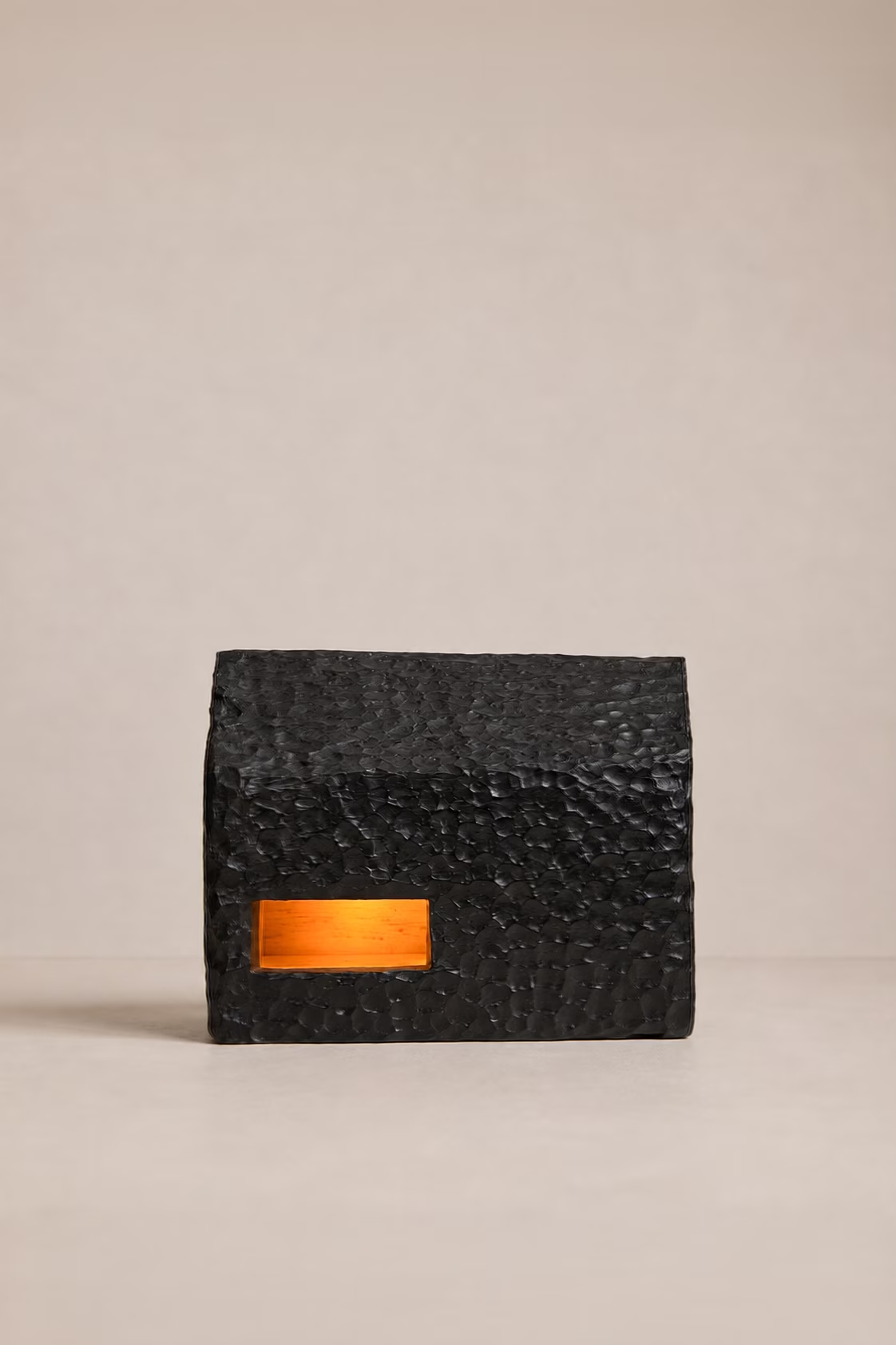
What does made-to-order furniture mean?
Made-to-order furniture is furniture that starts from an existing design but is only built once a client places an order.
The important part is that the design already exists.
The proportions, construction, materials, and overall visual language have already been worked out. The client is not starting from a blank page. Instead, they are choosing a piece that has already been designed and then, when necessary, adapting certain parts of it to better suit their home.
In my studio, that might mean changing the width of a media console, adjusting the height of a bedside table, choosing a different wood species, or modifying part of the storage.
The goal is not to redesign the piece completely. It is to make it work for the client while keeping the original design intact.
That is what separates made-to-order furniture from fully custom furniture.
Made-to-order vs custom furniture
These two terms are often used interchangeably, but I think there is an important difference.
With made-to-order furniture, you are starting from an existing object.
That object already has a specific identity. Its proportions, construction, joinery, and details are part of the design.
With custom furniture, the object itself still needs to be designed.
A client might come to me with a particular space, function, or list of requirements, and I have to develop a new piece around those constraints. That usually involves more drawings, more discussion, more testing, and more back and forth.
For me, the line is crossed when a request starts changing the fundamental design of the object.
Changing the width of a console might still be made-to-order.
Choosing another wood species might still be made-to-order.
Changing an open compartment into a closed compartment might also work within the original design.
But if someone tells me they dislike the legs and wants a completely different base, we are starting to design a different piece.
At that point, I would treat it as a custom project and price it differently.
Made-to-order furniture starts with proportions that already work
When I design a piece for my collection, I am not choosing the dimensions randomly.
I try to establish proportions that will work in a lot of homes and apartments.
A bedside table, for example, has to relate to the height of a bed. A media console needs dimensions that make sense for televisions, storage, circulation, and the proportions of a typical living room.
Those dimensions become a baseline.
But homes are obviously not all the same.
Someone might have an unusually tall bed. In that case, one of my bedside tables could be too low if I built it exactly as originally designed.
That does not mean I would simply make the legs taller and call it done.
I would look at the whole piece again.
Do the legs now look too short relative to the cabinet? Does the body need to change slightly? Does the increased height make the piece feel visually heavy?
The dimensions can change, but the relationships between those dimensions still matter.
If you are trying to work out those proportions for your own bedroom, I wrote a separate guide on how to choose the right bedside table.
That is where made-to-order furniture becomes more than simply entering a different number into a cutting list.
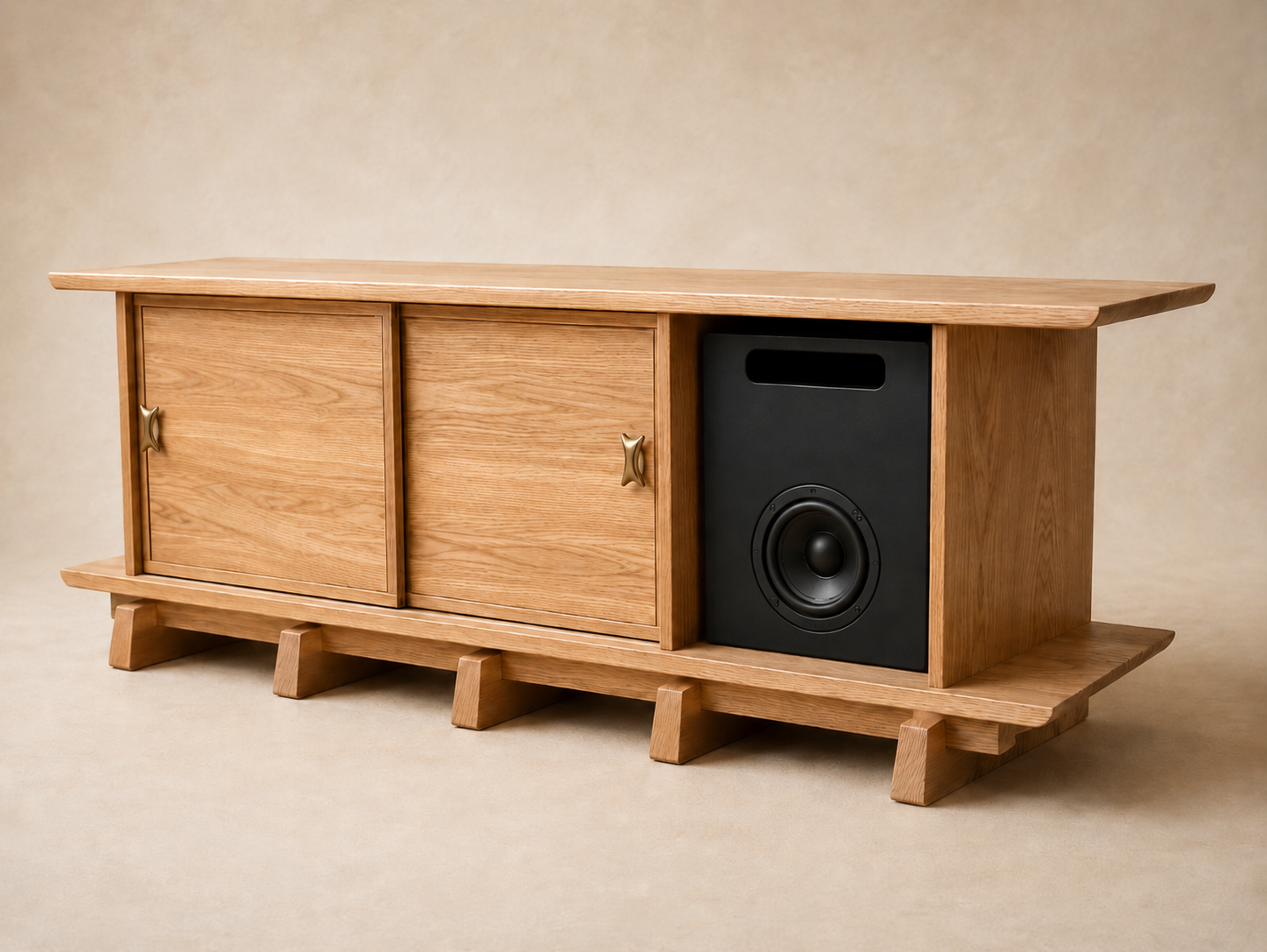
What can usually be changed?
The most common request I receive is a change in size.
Width is especially common because furniture often has to fit within very specific architectural constraints. A console might need to sit between two walls, under a television, or beside a fireplace.
Other possible changes include:
- overall width, height, or depth
- wood species
- finish
- storage configuration
- open versus closed storage
- doors or compartments
- small functional details
Some changes are relatively straightforward.
Changing from one hardwood to another with similar working properties might not affect the construction very much. The biggest differences may be the material cost and the finished appearance.
Other changes have a ripple effect.
If a console becomes much longer, for example, I cannot necessarily keep every other dimension exactly the same.
The doors might start looking too narrow. The feet may feel too small. The spacing between supports might become too wide.
The piece may technically function, but visually it starts to feel wrong.
That is why changing one dimension can lead to several other adjustments.
A real example: scaling the Dryade media console
One of the clearest examples is my Dryade media console.
A client wanted a version that was about 15 inches longer than the original design.
They also wanted one of the open sections to become a closed compartment with a hinged door.
On paper, those sound like simple changes.
But adding 15 inches to a piece of furniture can completely change its proportions if you simply stretch the cabinet.
So I lengthened the body while also adjusting the width of the doors so they kept the same visual rhythm as the original.
I made the feet slightly taller because the original proportions started to feel too small against the longer body.
I also added more feet so that the spacing between the supports stayed balanced and the longer cabinet remained properly supported.
The finished console was clearly larger, but it still felt like the same object.
That is what I consider a successful made-to-order modification.
The client gets something that works better in their home without losing the reason they liked the original design.
Changing wood can change the entire feeling
Not every modification involves size.
I have also built a credenza in a different wood species than the original.
From a construction perspective, the change was fairly simple because the two woods had similar hardness and working properties.
Visually, though, the difference was much more noticeable.
The alternative wood had a stronger grain pattern, which gave the finished credenza a more rustic character.
The geometry and construction remained the same, but the feeling of the piece changed.
That is why choosing a wood species is not just choosing a colour.
Different woods have different grain patterns, textures, movement, hardness, and visual weight. Two versions of the same piece can feel very different depending on the material.
Made-to-order does not mean unlimited customization
This is probably one of the biggest misunderstandings around made-to-order furniture.
Made-to-order does not mean that every part of an object can be changed.
There has to be a boundary.
Otherwise, you are no longer adapting an existing design. You are designing a new one.
If someone likes one of my cabinets but wants different legs, different doors, different proportions, and a different construction method, there is very little left of the original piece.
That is a custom project.
There is nothing wrong with that, but the amount of design work involved is very different.
Made-to-order sits somewhere between buying a completely standardized product and commissioning something from scratch.
You get flexibility, but within the boundaries of an established design.
Why does made-to-order furniture take longer?
Buying furniture from a large retailer has trained us to expect furniture to already exist somewhere.
You click a button, and a box arrives a few days later.
Made-to-order works differently.
In my case, I am not pulling a finished console out of a warehouse. Once someone orders a piece, I still need to source the lumber and build it in my shop.
I build the piece myself.
That means milling the wood, cutting the joinery, assembling the cabinet, making the doors or drawers, sanding, finishing, and dealing with all the small adjustments that come with handmade furniture.
Even if I have built the same design before, it still takes time.
Any modifications can add more time because dimensions, proportions, joinery, or material quantities may need to be recalculated.
So the lead time is not simply waiting for an existing product to ship.
The furniture still has to be made.
Why I prefer made-to-order over making everything custom
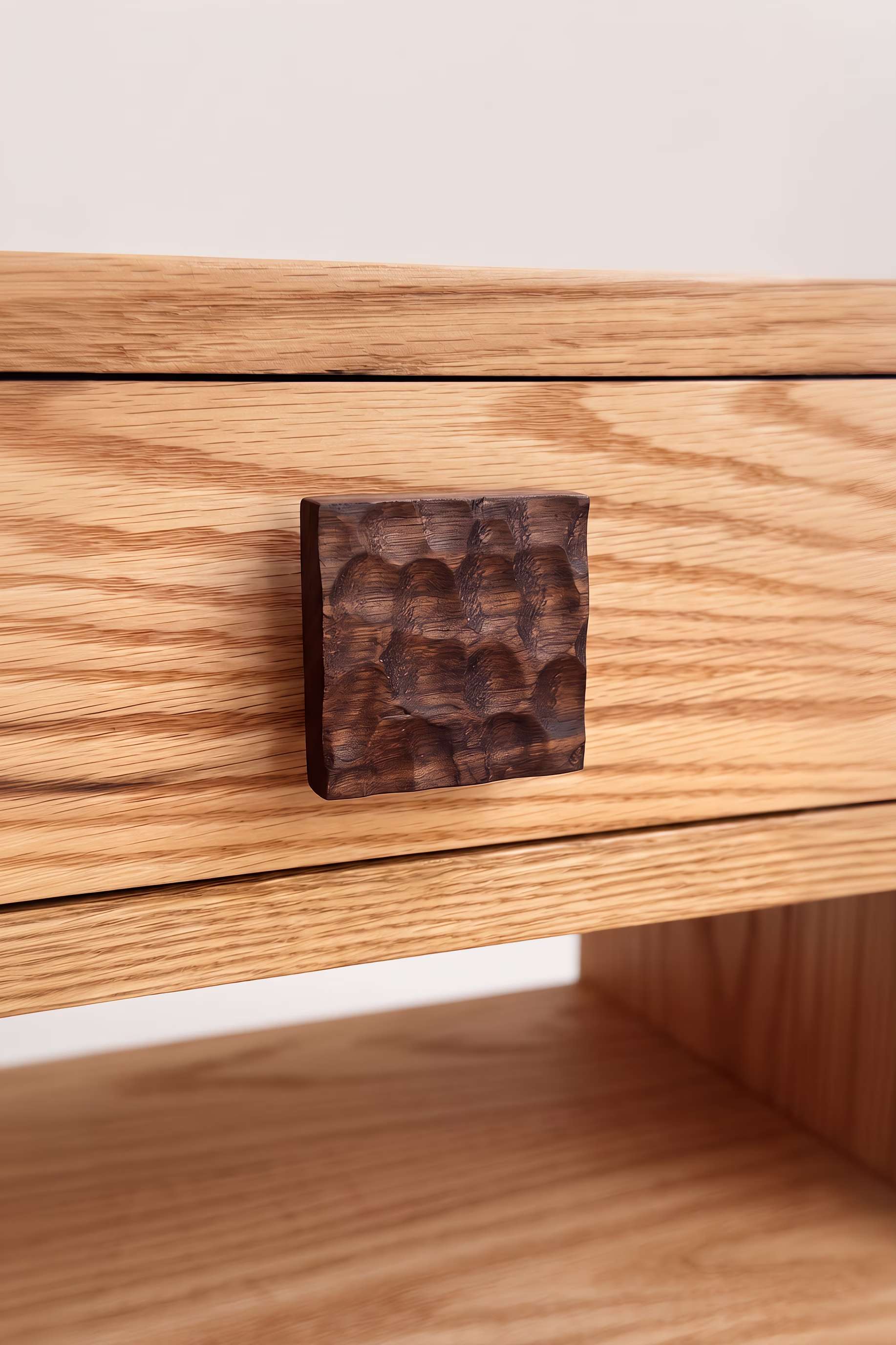
One of the biggest advantages of made-to-order furniture is that the client can see what already exists.
They can look at photographs, understand the proportions, see the materials, and get a much clearer idea of what the finished piece will look like.
With a fully custom project, there is always more interpretation involved.
You are discussing drawings, references, dimensions, and ideas for an object that does not exist yet.
That design process also makes fully custom furniture more expensive.
Personally, I also prefer starting from designs that I already believe in.
I can make adjustments for someone's space without diluting the idea behind the piece.
That balance matters to me.
I want clients to have flexibility, but I also want the furniture leaving my shop to feel consistent with my design philosophy.
If you are still trying to define what kinds of shapes, materials, and details you actually respond to, I also wrote about how to figure out your furniture style.
The design gets better every time I build it
There is another advantage to made-to-order furniture that I think is easy to overlook.
I get to build the same design more than once.
Version two is rarely identical to version one from the maker's perspective.
Maybe I find a cleaner way to cut a joint. Maybe I change the order of assembly. Maybe a tolerance becomes tighter. Maybe I notice a small detail that can be improved.
By version four, version six, or version nine, the object can become significantly more refined.
The design may look almost identical from the outside, but the craftsmanship and process behind it continue improving.
That is very different from mass production.
The goal is not to standardize the object until it can move down an assembly line as quickly as possible.
Each piece is still individually built in the shop, using real lumber with its own grain, colour, and variation.
There is repetition, but the object is still handmade.
Is made-to-order furniture right for you?
Made-to-order furniture makes the most sense when you already like an existing design but need it to work better for your home.
Maybe the standard width is slightly wrong for your wall.
Maybe your bed is unusually high.
Maybe you prefer walnut instead of oak.
Maybe you need one extra closed compartment.
Those are the kinds of problems made-to-order furniture can solve.
If you want to completely rethink the structure, proportions, function, and appearance of the object, then a fully custom project probably makes more sense.
The simplest way to think about it is this:
Made-to-order furniture starts with a finished idea and adapts it to you.
Custom furniture starts with you and develops the idea from there.
For my own work, I like the space between those two extremes. It gives clients enough flexibility to make a piece work properly in their home while allowing me to preserve the proportions, construction, and character that made the original design successful.
If that approach sounds like what you are looking for, you can browse my made-to-order furniture collection to see the pieces currently available.
